
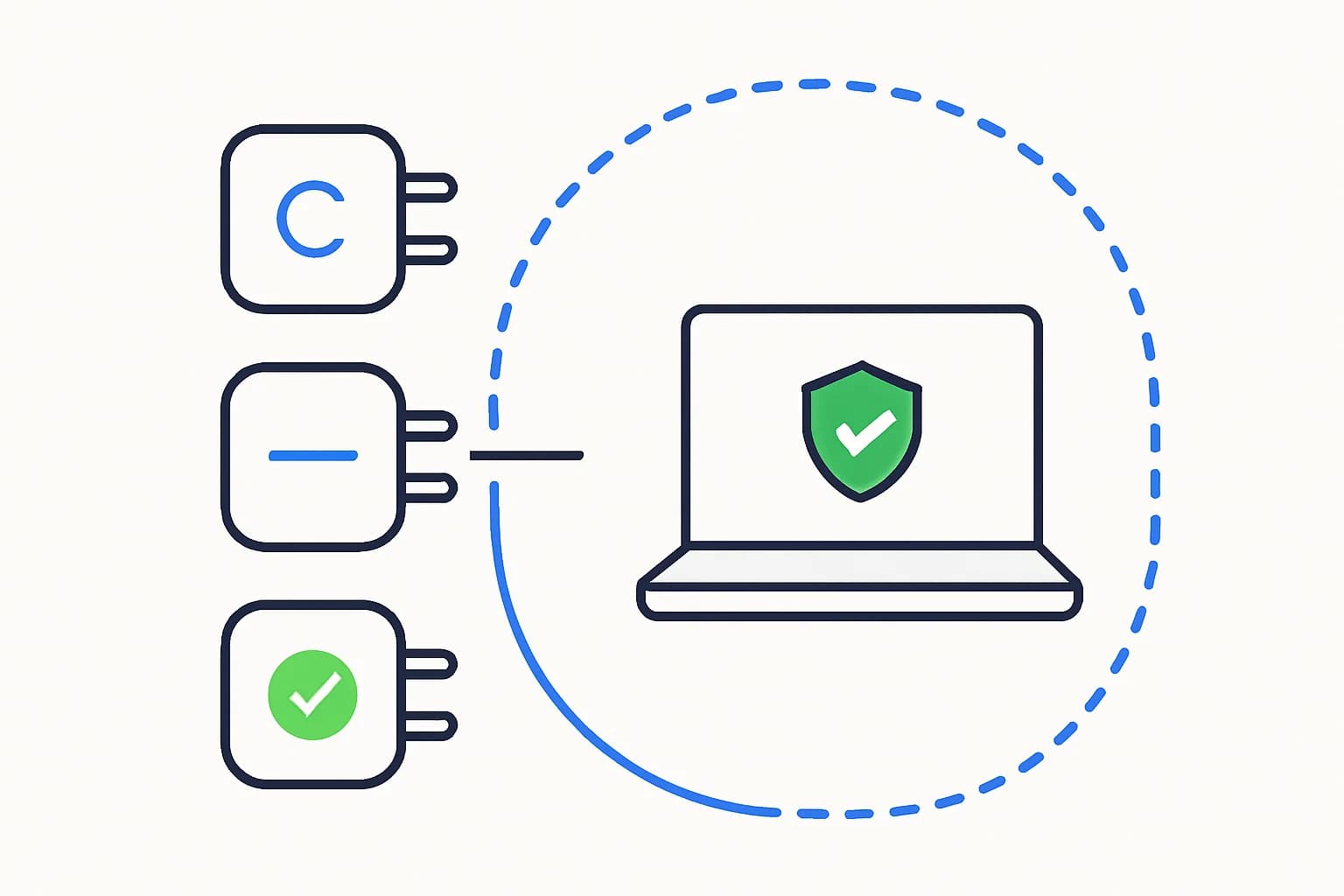
On November 23, 2026, SplitSecure announced a consolidated privileged-access platform that stores secrets with client-side splitting instead of a single vendor vault—and documents StepAuth so an application, or an AI agent through MCP, cannot approve its own high-risk actions. The launch materials on splitsecure.com and SplitSecure documentation describe Guardian Team approvals, just-in-time credential release, and an MCP gateway for StepAuth-aware agents. If your coding agents read .env files, rotate cloud keys, or automate admin consoles, this changes where production credentials live and who must click approve—not whether prompt injection on a laptop can still run curl with a stolen token.
Beam's November OpenRouter enforcement post and Together AI's agent-leaked Hugging Face credential show long-lived secrets in agent context failing in the wild. SplitSecure addresses a different failure mode: vendor-holds-the-vault architecture and agents that inherit standing privilege. This article maps what SplitSecure actually ships, how StepAuth works from primary docs, and what to combine with workstation agent monitoring.
TL;DR
| Question | Answer (November 24, 2026) |
|---|---|
| Am I affected? | Yes if agents or scripts touch production passwords, SSH, signing keys, or break-glass admin—whether stored in 1Password, Hashicorp Vault, or flat files |
| Is there a fix? | No CVE—this is a new product option: evaluate secret splitting + StepAuth if vendor vault compromise is in your threat model |
| Does data leave my machine? | SplitSecure is cloud-coordinated; Guardian approvals and enclave operations are not the same as Beam's on-device-only event store |
| Coding-agent takeaway? | Stop giving agents standing vault access; route destructive or prod-touching automation through StepAuth or human gates, and still watch PreToolUse locally |
| Try it? | Free tier up to six members per splitsecure.com; docs cite under 30 minutes target for first service-provider setup |
What SplitSecure announced
Cyber Security News syndicated the November 23, 2026 CyberNewswire release describing San Francisco–based SplitSecure's new access control architecture for humans and AI agents. The company positions the product as replacing password managers, PAM, and centralized vaults with secret splitting: breaking secrets across multiple devices rather than one repository the vendor can read.
CEO Tristan Morris is quoted saying the goal was a tool where customers do not have to trust the provider as custodian of secrets, while remaining usable for non-technical staff—not only security engineers. The release states SplitSecure raised $4.7M from Cowboy, Twelve Below, and Cofound Ventures after founding in 2025.
Launch-day capability list from the release and product site:
- Passwords, passkeys, OTPs, SAML 2.0 / OIDC, SSH, x.509 CA, OpenPGP, code signing (including AWS Nitro and Google Chrome extension signing called out in the release)
- PAM-style features: zero trust, just-in-time access, zero standing privilege, on-demand step-up, multi-party approvals, quantum resistance cited as standard
- Built-in audit on every plan; paid plans expose logs for security analysis and forensics
- Free plan for teams up to six
The architecture claim that matters for agent teams: root keys held exclusively by the customer, so SplitSecure as vendor has no access to customer secrets—contrasted with traditional PAM where the provider holds keys to the kingdom.
How secret splitting differs from a single vault
Most enterprise stacks stack a password manager, MFA app, vault, cert manager, and PAM—each storing client material in a central vault the vendor can decrypt with sufficient compromise. SplitSecure's pitch is to disrupt that singular-vault pattern using secret splitting practices common in classified environments for over thirty years, now packaged for faster rollout (the release targets under half an hour for migration or first setup).
SplitSecure's password documentation explains operational detail:
- Each stored item has encrypted and visible parts; visible metadata supports search and matching before approval.
- The vault runs operations in an enclave; operators of the hardware cannot see inside.
- Plaintext leaves the enclave only after Guardian Team approval, encrypted for the browser or device named in the approved request.
- For passwords, SplitSecure acknowledges every password manager shares the weakness that typed secrets must eventually leave the enclave—but limits blast radius: each approved request releases only the passwords it names.
For coding agents, the lesson is structural: if your agent reads a full production API key from a flat file or single-vault export, compromise of one laptop or one vault session exposes everything in that export. Splitting plus per-use approval forces granular release aligned with agent permission boundaries—closer to least privilege than "agent service account owns the vault."
StepAuth: blocking self-approved agent damage
StepAuth overview is SplitSecure's answer to execution governance for sensitive in-app actions—examples include wiping a managed laptop before an MDM command runs.
Documented properties:
- Application sends a signed authorization request to the organization's SplitSecure hub.
- Approver reads the exact action text in Web App or Slack and approves or denies outside the requesting application.
- Hub returns a signed decision to the application's callback URL; the app verifies before executing.
The documentation is explicit about agents: "A stolen session or an AI agent in your application cannot approve its own actions." A role grants capability; StepAuth adds proof that someone agreed to this particular action with the exact text the approver saw.
How it works adds protocol mechanics:
- No session, no API key, no polling between parties—messages are signed envelopes.
- Each side uses dual signatures: ed25519 and post-quantum ml-dsa-65; both must verify.
- Hub metadata and service-provider metadata exchange public keysets and callback URLs before the first request.
That design targets agentic automation inside a registered service (for example, an internal deployment tool or MDM), not Claude Code running arbitrary bash on a developer Mac. It is complementary to shared-responsibility gaps between model vendors and your infra.
MCP path for agent harnesses
SplitSecure's website FAQ states: "If you're using AI agents through the StepAuth protocol, they connect via MCP (Model Context Protocol) gateway." That places SplitSecure in the same MCP ecosystem Beam monitors for rug-pull and supply-chain patterns—but as a credential and approval broker, not a skill scanner.
Practical read for teams running Claude Code, Codex, or Cursor with MCP tools:
- MCP is still a server with privileges; wire it through SplitSecure only if you accept cloud-mediated approval latency and Guardian Team availability.
- Do not confuse MCP StepAuth with PreToolUse hooks; hooks fire before local tool execution on supported CLIs, per Beam agent hooks documentation.
- Inventory which MCP servers can trigger StepAuth releases the way you inventory inference provider routing.
Attack chain when agents inherit vault access
A common 2026 failure mode—visible in OpenRouter provider incidents and Dragos canary research—looks like this:
- Developer enables a coding agent with broad file and network tools.
- Agent loads repo context that includes
.env, kubeconfig, or vault export fragments. - Prompt injection, malicious skill, or model mistake issues a tool call that exfiltrates or uses those secrets.
- Attacker or third-party model host reuses credentials outside the intended window.
StepAuth interrupts a different step: before your registered application performs the named destructive or privileged operation—for example, pushing a wipe command or releasing a signing key—after humans see verbatim action text.
Secret splitting interrupts vault concentration: an attacker who compromises SplitSecure's operations staff should not receive reconstructable secrets without threshold Guardian devices.
Neither control stops a developer pasting an API key into a chat unless your release policy forbids it and your laptop monitor catches the paste path.
What this means if you run AI coding agents
Inventory where agents get credentials today:
# Common leak paths on developer laptops — not SplitSecure commands
grep -r "OPENROUTER\|ANTHROPIC\|AWS_SECRET" ~/.claude ~/.codex .env* 2>/dev/null | head
- Move production credentials off agent-readable dotfiles where policy allows; use short-lived tokens and per-task releases.
- If you pilot SplitSecure, map which automations are StepAuth-registered service providers versus ad hoc shell the agent still runs locally.
- Keep workspace policy on observe → enforce for destructive commands and credential-shaped flags in tool calls Beam understands.
- After provider incidents, rotate any secret that ever rode in inference prompts—SplitSecure does not retroactively clean already-leaked OpenRouter traffic.
When SplitSecure is a better fit than Beam alone: centralized SSH cert issuance, code signing, break-glass secrets, or multi-party approval for prod automation triggered by agents through governed MCP.
When Beam is the better fit: local, privacy-first NDJSON audit of what the agent tried on the laptop, heuristic skill/MCP scans, and PreToolUse deny for Claude Code and Codex—without routing every developer keystroke through a cloud PAM.
How Beam handles this
Beam watches proposed and executed tool calls on the workstation, scans skills and MCP configs with eleven heuristics plus an MCP version-pin check, and can deny matching PreToolUse events for Claude Code and Codex when cached workspace policy is in enforce mode. Events are redacted before persistence on disk. Beam does not split enterprise secrets across a Guardian Team, issue SSH certificates, or operate StepAuth callbacks in your VPC. Enforce is hook-based, not a kernel sandbox; missing cached policy is fail-open; Cursor and other harnesses may receive advisory notes only. Use Beam for developer-machine evidence; use SplitSecure-class tools when custodial vault architecture is the problem you are solving.
What to watch next
SplitSecure's launch is product availability, not a CVE. Worth tracking:
- StepAuth SDK adoption in internal agent platforms (CI wipe jobs, fleet management, signing pipelines).
- Whether MCP gateway docs publish threat models for compromised agent hosts replaying approval callbacks.
- Trust Center framework mappings your compliance team will ask for before agents touch regulated data.
Official sources: splitsecure.com, documentation, and the November 23 launch write-up.
Frequently asked questions
What did SplitSecure launch on November 23, 2026?
SplitSecure announced a consolidated access platform on November 23, 2026 that replaces multiple vault, PAM, and password-manager tools with secret-splitting storage, Guardian Team approvals, and modules for passwords, passkeys, SSH, certificates, signing keys, and StepAuth execution governance. A free tier covers teams of up to six members per its launch materials.
How does SplitSecure secret splitting work?
SplitSecure distributes secrets as shares across members of a Guardian Team rather than storing the full secret in a single vendor-operated vault. Its documentation states master keys are held exclusively by the customer organization and that the vendor cannot access customer secrets by design—operations run in an enclave and release plaintext only after Guardian Team approval for named items.
Can an AI coding agent approve its own SplitSecure StepAuth request?
No, according to SplitSecure StepAuth documentation. StepAuth sends sensitive action text to approvers outside the application; approvals are signed decisions returned to a callback URL. The docs state a stolen session, compromised script, or AI agent in the application cannot approve its own actions because the human decision happens in SplitSecure Web App or Slack, not inside the agent runtime.
How do AI agents connect to SplitSecure?
SplitSecure site FAQ says agents using the StepAuth protocol connect through an MCP (Model Context Protocol) gateway. That is a server-side integration pattern for gated releases of secrets or approvals—not a drop-in replacement for Claude Code hooks on a developer laptop.
Does SplitSecure stop prompt injection in coding agents?
Not directly. StepAuth governs whether a registered application may execute a specific high-risk action after human approval. It does not scan prompts, MCP skill files, or shell commands on the workstation the way a local agent monitor does. Teams still need injection defenses on the laptop even if production credentials sit behind StepAuth.
Is SplitSecure free for small teams?
Yes. SplitSecure launch messaging and its website state a free plan for organizations up to six members, with paid tiers for larger Guardian Teams and forensic log analysis. Confirm current limits on splitsecure.com before planning production agent automation.
What credential types does SplitSecure support at launch?
Launch and product pages list passwords, passkeys, one-time codes, SAML and OIDC federation, SSH, x.509 CAs, OpenPGP, code signing including Nitro and Chrome extension keys, and general secrets vaulting—intended to condense two to five separate security tools.
How does Beam differ from SplitSecure for coding agents?
Beam is local-first observability and hook-based deny for Claude Code and Codex PreToolUse on the workstation, plus heuristic skill and MCP config scanning before you run them. SplitSecure is organization-wide credential splitting and StepAuth approvals, often cloud-coordinated. Beam does not vault enterprise passwords or run multi-party secret reconstruction; SplitSecure does not replace on-device agent action logs.
Related reading
- AI agent security permissions and tool boundaries
- What is AI agent monitoring?
- OpenRouter data processing incidents
- MCP security practical guide
- Agent shared responsibility gap
- Together AI prompt leak via coding agent
- Beam coding assistant security solutions and how Beam works
SplitSecure product details, StepAuth cryptography, and pricing are accurate as of November 24, 2026, from splitsecure.com and docs.splitsecure.com. Beam capability limits reflect shipped docs at beam.dev.