
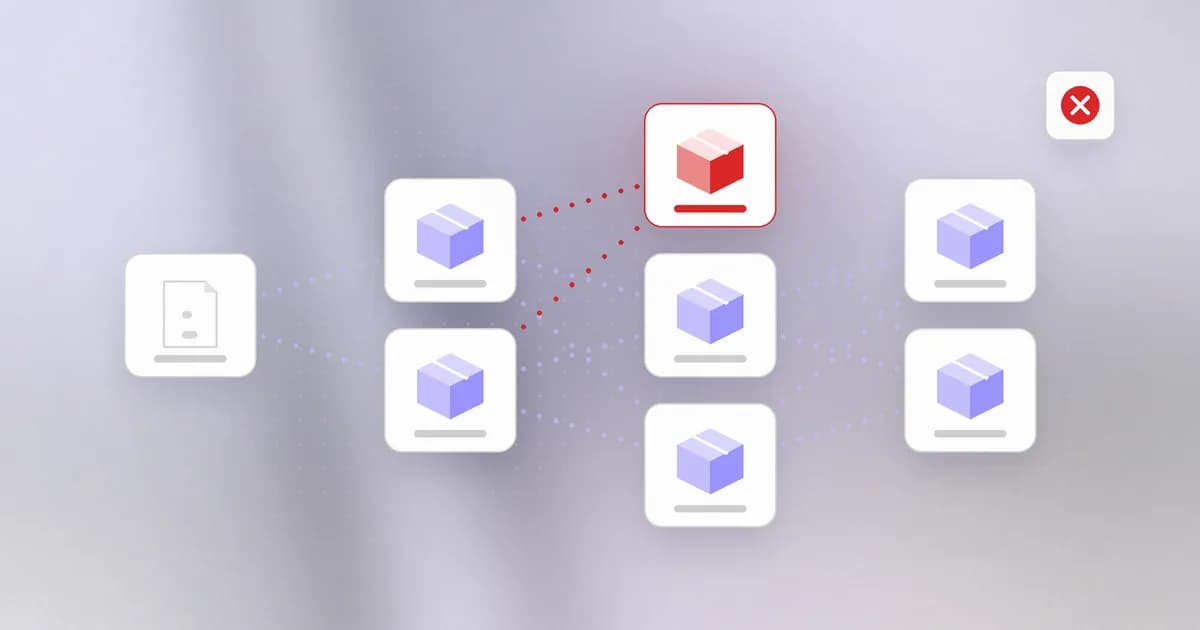
On November 22, 2026, OpenRouter published Data Processing Incidents on Inference Providers: after security researchers—including Dragos—showed inference hosts mishandling customer traffic, OpenRouter off-boarded three upstream providers, removed 125 model endpoints from Zero Data Retention (ZDR) eligibility, and notified potentially affected customers. The post states those findings did not show a breach or unauthorized access of OpenRouter itself; they revealed new problems at specific inference providers in the chain your coding agent may already use via OpenRouter, LiteLLM, or Hugging Face's November 16 OpenRouter routing.
If you have been searching whether OpenRouter was hacked, the vendor's line is no OpenRouter platform compromise—but upstream prompt exposure is verified at multiple providers OpenRouter routes to, and ZDR badges you relied on are being revoked in bulk.
explainx.ai has the full news timeline on MiniMax routing and customer email warnings (a separate news site, not Beam). This post walks through what OpenRouter changed, what Novita, Phala, and Together AI disclosed, and what to check on laptops that send repository text through a broker.
TL;DR
| Question | Answer (as of November 22, 2026) |
|---|---|
| Am I affected? | Yes if agents or scripts sent code, credentials, or customer data through OpenRouter, HF Inference Providers, or LiteLLM to MiniMax, DeepSeek V4 Flash 0731 on Phala, or Together serverless in the windows below |
| Is there a fix? | No single patch—rotate secrets, pin providers, review OpenRouter email, and drop default cheapest routing on proprietary repos |
| Was OpenRouter itself breached? | OpenRouter says no unauthorized access to OpenRouter; upstream providers are where exposures were confirmed |
| Does data leave my machine? | Yes for cloud inference; this incident is about who else read it after it left—compromised VMs, forwarding to model vendors, or stored test samples |
| Coding-agent takeaway? | Inventory model_slug + host from logs, map to provider notices, and assume .env fragments in agent context may be in stolen sets |
What OpenRouter announced
In its November 22 post, OpenRouter describes collaboration with researchers and providers after data compromised or data-policy failures at inference providers—language that matches the Dragos canary-token study HD Moore published November 19, which seeded unique secrets through routers and marketplaces for months.
OpenRouter's enforcement actions that day:
- Off-boarded three providers from OpenRouter after internal investigations (the blog does not publish their names).
- Removed 125 endpoints from ZDR eligibility, including researcher-flagged routes and additional precautionary removals.
- Notified all potentially affected customers (including where providers have no public post).
In progress, OpenRouter says it is:
- Adapting the researchers' canary testing for ongoing provider checks.
- Verifying network paths for requests or responses forwarded to undisclosed third parties—the same class of hidden hop Moore traced when OpenRouter appeared in a route trace but not in marketplace disclosure.
- Requiring assurances and validation before any endpoint regains ZDR.
OpenRouter thanks the Dragos report explicitly and frames this as raising the bar for providers that want to stay on the platform.
Critically, OpenRouter separates gateway integrity from upstream behavior: your OpenRouter API key may be fine while prompts you already sent transited a compromised or misconfigured host. That distinction matters for teams who conflate "vendor not breached" with "my repo text stayed private."
Provider notices OpenRouter linked
OpenRouter maintains a live list of provider security announcements. On November 22, 2026, it pointed to three public write-ups.
Novita: MiniMax forwarding
Novita's privacy notice (November 22, 2026) says an independent researcher reported mishandled MiniMax requests. Novita confirmed some traffic was forwarded to MiniMax's official API rather than processed on Novita-hosted infrastructure and suspended affected models.
If you used MiniMax through Novita between 2026-05-28 and 2026-11-11, Novita warns request contents may have been accessed or retained by a third party, including traffic routed to Novita through OpenRouter. The researcher saw URL and hostname accesses from embedded test strings; AWS test key markers were not used. Novita recommends rotating live credentials in those requests and contacts [email protected] for account questions.
For coding agents, that window overlaps agent-heavy summer and autumn sessions where teams routed Kimi-class or MiniMax endpoints through brokers for cheaper tokens—exactly the multi-hop pattern Hugging Face's migration now centralizes.
Phala: DeepSeek V4 Flash 0731 on a new GPU server
Phala's preliminary incident report (November 10, 2026, linked again November 22) is the clearest host compromise story in the bundle. Phala asks anyone whose DeepSeek V4 Flash 0731 requests were routed to Phala by OpenRouter between October 21, 00:00 UTC and November 8, 05:35 UTC to treat request contents as exposed and rotate secrets in those prompts.
Phala's timeline: unauthorized activity November 5, evidence of in-flight request exposure on a new GPU inference deployment without full production hardening by November 8, containment 05:35 UTC. Canary credentials in researcher tests from October 21–22 were misused; Phala keeps the wider window because tests sampled rather than monitored every request.
That is infrastructure breach exposure, not a privacy-label mismatch—ZDR on the OpenRouter card would not have stopped an attacker on the inference VM from reading plaintext.
Together AI: stored prompt samples
Together AI's security event (November 21, 2026) is a different mechanism: an AI coding agent committed a Hugging Face repo credential to public xorl, letting an adversary download June–July 2026 serverless prompt samples for MiniMax M3, GLM-5.2, and Kimi K2.6. Beam's dedicated breakdown covers dates, ZDR defaults, and rotation. OpenRouter lists it because Together remains part of the ecosystem OpenRouter routes to even when the failure mode is vendor-internal dev hygiene, not OpenRouter's API.
Together's disclosure also confirmed five Dragos canary credentials in stolen samples—bridging Moore's measurement to a named provider path.
How this connects to the Dragos study
Moore's team sent on the order of two million prompts with unique trackable secrets through OpenRouter-style gateways from July through November 2026. They reported three hosting-provider compromises where all traffic in breach windows was stolen, marketplace resellers who logged prompts, and scraping that ignored ZDR.
OpenRouter's November 22 response is the broker-side enforcement layer: off-boarding, ZDR revocations, customer notice, and promised ongoing canary checks. It does not replace per-provider RCAs—Phala's full root-cause analysis is still pending—but it changes what you should assume about any endpoint still showing ZDR after 125 removals.
If you read only one upstream document, start with Dragos's post for mechanism and OpenRouter's announcement for what the router changed this week.
Attack chain in plain terms
For a developer laptop running Claude Code, Codex, or OpenCode with an OpenRouter or Hugging Face inference key:
- Agent assembles context—files, git output, MCP tool results, sometimes
.envor private URLs. - Harness sends a chat completion to a broker (OpenRouter directly, or HF Inference Providers which now uses OpenRouter for language models).
- Broker selects an upstream provider by price, speed, or your
:providersuffix—or fails over on errors, as HF documents. - Upstream host processes plaintext—routing, billing, safety filters, and optionally logging, forwarding, or attacker collection at a compromised ingress.
- Secrets embedded in prompts (API keys, canary URLs, private git refs) become proof of exposure when touched elsewhere—Moore's method, now adopted by OpenRouter for provider vetting.
The Novita case adds step 4b: silent forward to the model vendor's API. The Phala case adds step 4c: attacker on the inference VM reads in-flight data. Together adds step 4d: internal test artifacts leaked via an agent's git push.
None of those are fixed by telling the agent "don't paste secrets" alone when the agent reads secrets from disk and the broker still ships the whole prompt.
What this means if you run AI coding agents
Concrete checks grounded in the primary sources above:
-
Read OpenRouter account email if you received incident notice. OpenRouter states it notified potentially affected users even when providers stay silent publicly.
-
Map models and dates from your inference logs against:
- Phala / DeepSeek V4 Flash 0731: Oct 21 00:00 UTC – Nov 8 05:35 UTC.
- Novita / MiniMax: May 28 – Nov 11, 2026.
- Together serverless: June 24, July 4, 8, 14, 2026 on listed models (see Together post).
-
Rotate OpenRouter keys, Together keys, and any third-party API keys that lived in agent-readable files and were ever included in prompts during those windows. Follow the October OpenRouter key checklist for per-key credit limits and scoped management keys—still valid even though the October dark-web breach claim was never confirmed.
-
Pin providers in OpenRouter or HF settings instead of
:cheapeston proprietary code—the reseller logging Moore documented targets lowest-price pools. -
Disable providers you do not recognize in Hugging Face Inference Providers after the November 16 migration.
-
Place a canary (Thinkst URL or disposable cloud credential) in a test prompt through the same path your agent uses; any hit means your production path can leak.
-
Review CloudTrail or vendor usage for anomalous geographies after agent sprints—Moore's attackers hammered bait AWS keys tens of thousands of times.
If you self-host models locally, you avoid this cloud chain—at hardware cost most teams skip for everyday coding.
What Beam can and cannot do here
Beam is local, on-device observability for coding agents: it watches Claude Code and Codex actions, heuristically scans skills and MCP configs, redacts known credential shapes before storage, and can deny some PreToolUse commands when workspace enforce policy is cached.
That helps prevent agents from exfiltrating files or running destructive commands on the workstation. It does not inspect OpenRouter's upstream routing, enforce ZDR at a reseller, or block an inference HTTP call that already left the machine with your repository attached. Missing cached policy is fail-open; scanning is not semantic malware analysis.
Use Beam for laptop-side evidence; use provider pinning, rotation, and canaries for the cloud supply chain OpenRouter is now policing. See how Beam watches agent actions and API keys in logs for overlapping workstation risks.
What developers are saying
Hacker News readers on OpenRouter's announcement thread focused on trust boundaries:
- redrix argues the strongest ZDR agreement is direct with the inference provider, and that smaller teams often cannot afford that—leaving them trusting policies they cannot audit.
- Havoc notes that teams serious about ZDR rarely start with a middleman router in the path.
- solarkraft is skeptical that removing labels fixes enforcement without technical audits.
- the_lucifer asks why OpenRouter has not named the three off-boarded providers publicly, complicating workflow impact assessment—OpenRouter's November 22 blog still omits those names.
Those comments reflect procurement reality for agent teams: brokers add failover and billing convenience, but privacy guarantees decay with every undisclosed hop.
Frequently asked questions
Was OpenRouter hacked in November 2026?
OpenRouter's announcement says researcher findings did not show breach or unauthorized access of OpenRouter. Upstream inference providers are where new exposures were documented.
How many providers did OpenRouter off-board?
Three, per OpenRouter's November 22 post, without public naming. Treat any provider-linked notice (Novita, Phala, Together) as a separate accountability thread until OpenRouter maps names.
What did OpenRouter do about Zero Data Retention (ZDR)?
125 endpoints lost ZDR eligibility; restoration requires assurances and validation plus ongoing network path verification.
Is OpenRouter safe for coding agents?
Usable with constraints: pin providers, cap keys, rotate after exposure windows, and never treat ZDR as encryption. See also LiteLLM gateway exposure if you self-host a proxy.
Which inference providers published incident notices?
Novita, Phala, and Together AI as linked November 22; others may be affected with customer-only notice.
Should I rotate keys after the OpenRouter incidents?
Yes for traffic in the documented windows or if OpenRouter emailed your account. Rotate broker and upstream keys together when prompts contained secrets.
Does Hugging Face OpenRouter routing change this incident?
Yes—HF chat inference now rides OpenRouter, so HF token spend can hit the same audited provider pool. Audit Inference Providers settings.
What is the Dragos connection?
Dragos canary research triggered OpenRouter's response; OpenRouter plans ongoing canary-style provider testing per its announcement.
Related reading
- Dragos AI supply chain canary study
- Together AI xorl coding-agent leak
- Hugging Face OpenRouter routing
- OpenRouter breach claim vs verified (October)
- AI API key theft supply chain
- First 24 hours after vendor breach
Primary sources: OpenRouter — Data Processing Incidents on Inference Providers (November 22, 2026); Novita — Privacy Notice Regarding MiniMax Requests (November 22, 2026); Phala — November Preliminary Incident Report (November 10, 2026); Together AI — Security event: Prompt leakage (November 21, 2026); Dragos — AI Supply Chain Security (November 19, 2026).
Provider off-boarding names, ZDR endpoint lists, and investigation status are accurate as of November 22, 2026 UTC. OpenRouter may update its provider announcement list without changing this mechanism summary.