
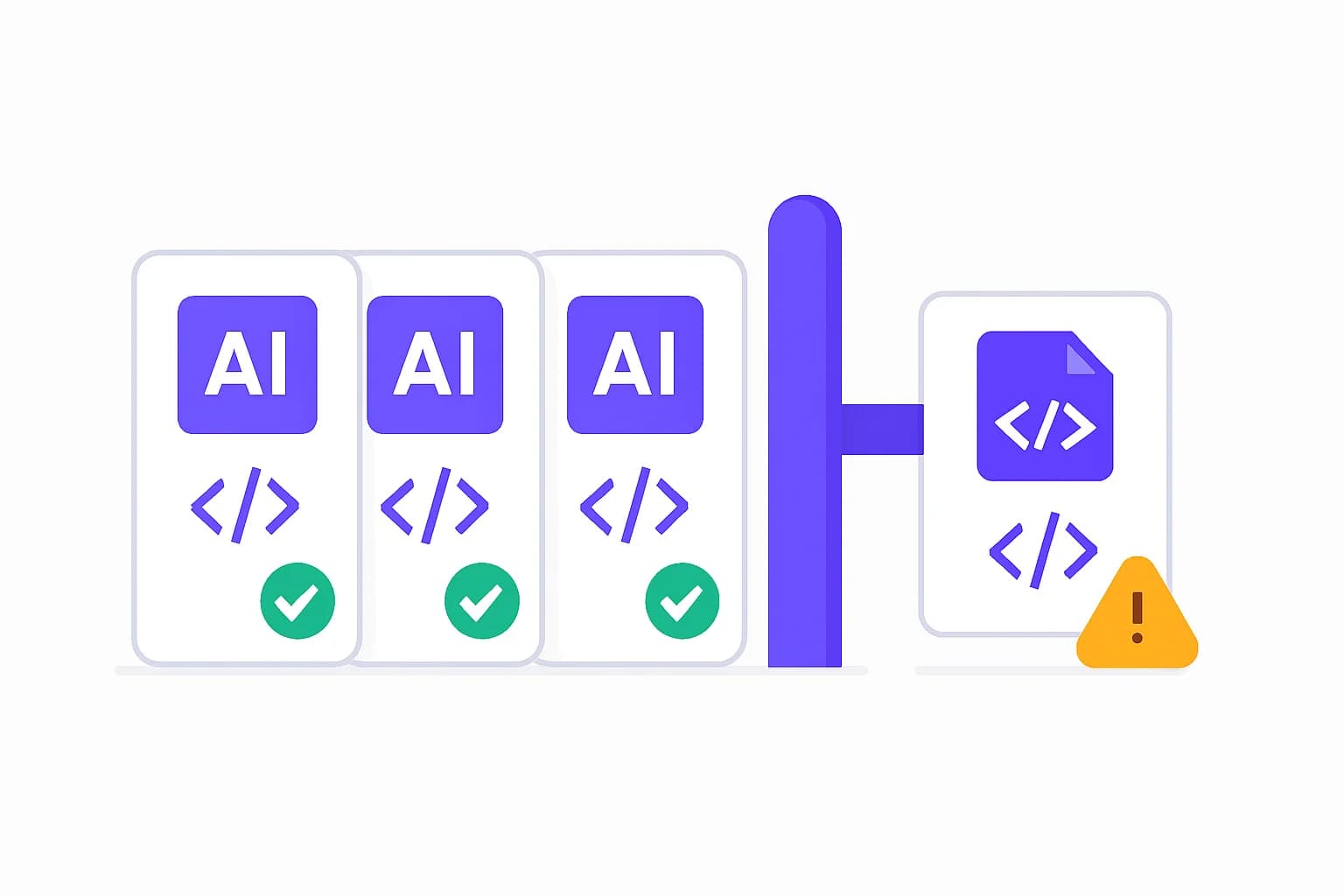
On November 3, 2026, CrowdStrike announced an "AI Kill Switch" in Falcon Guardian, its endpoint product for AI agents, and a separate integration that brings Falcon Guardian into Anthropic's Claude Cowork. The kill switch is designed to stop internal agents that misbehave. According to CNBC's report, it does this by cutting the agent's access to the AI models that drive its decisions, using connected AI gateways, rather than by deleting the agent. A human decides when to pull the switch and when to restore access.
This is a product announcement, not a vulnerability. It matters to anyone running coding agents because it answers a question security teams keep asking: when an agent does something you did not intend, what is the off button, and what does it actually switch off? This post sticks to what CrowdStrike and CNBC say, flags what they leave out, and lists what to check in your own setup. This post covers the mechanism and the defense.
TL;DR
| Question | Answer |
|---|---|
| What was announced? | An AI Kill Switch in Falcon Guardian, and Falcon Guardian AI Detection and Response (AIDR) for Claude Cowork on Windows and Mac. |
| Am I affected? | Only if your organization buys CrowdStrike Falcon Guardian or runs Claude Cowork under Falcon. Nothing to patch. |
| How does the kill switch stop an agent? | Per CNBC, by cutting its access to AI models through connected AI gateways and blocking relaunch. |
| Is it automatic? | No. A human decides to cut off and to restore. |
| Does data leave my machine? | Falcon is a cloud-managed product; the sources do not detail agent-content telemetry. Ask your vendor. |
| Is there a general availability date? | None given in the sources I read. |
What was actually announced
Two separate announcements landed the same day. CrowdStrike's Cowork release is dated to its Fal.Con Europe event in Barcelona.
The kill switch. CNBC reports it is built into Falcon Guardian, which launched in September 2026 to inventory and control AI agents on endpoints. Security teams can stop internal agents that misbehave, block them from relaunching, and cut off their enterprise network access. CrowdStrike's chief business officer Daniel Bernard describes it as a circuit breaker and, per CNBC, as "very binary": you either kill the agent or you don't, and then you report on that. CrowdStrike's own wording is in its AI security and safety release, which I could not load directly (the page returned a 403), so the kill-switch details here rest on CNBC's account of it.
The Cowork integration. In its release, CrowdStrike says Falcon Guardian AIDR comes into Claude Cowork to detect malicious activity and possible data exfiltration as agents access sensitive information and enterprise systems. It is deployed with Cowork on Windows and Mac, alongside Cowork's existing virtual machine, permission and admin controls. Anthropic's Paul Smith is quoted: "Now CrowdStrike customers can run Falcon inside Cowork and keep the protection they already rely on." The release does not say whether a Falcon sensor runs inside the virtual machine, gives no availability date, and carries the usual forward-looking caveat that features are in development.
CNBC also notes CrowdStrike announced plans to acquire Fiddler AI and Dreadnode; those are outside this post.
How the kill switch works, step by step
From CNBC's description:
- Detection. Falcon detects internal agent activity on the endpoint. Falcon Guardian's September launch was built around discovery: VentureBeat reported one customer found 18,000 agents running where 300 were approved.
- Human decision. Per CNBC, the system detects, but a person decides whether the activity is benign or malicious and whether to cut the agent off.
- Cutoff. The agent loses access to the AI models that drive its decisions, via connected AI gateways. It is also blocked from relaunching and from enterprise network access.
- Reporting. The action is reported, per Bernard's "kill, or don't, and then you report on that."
- Restore. A human decides when to give access back.
CrowdStrike says it does not delete the agent's code. That is a meaningful design choice: the agent's files, configuration and any state remain for investigation, and the control point is the model connection rather than the process.
For context, SiliconANGLE's September launch coverage described Guardian as already blocking unapproved agents on managed endpoints; the November 3 kill switch adds a response action built around AI gateways.
Where a gateway-based cutoff stops
The mechanism has a built-in boundary, and it is the same one that shapes every agent control placed outside the agent.
- It depends on the path. Cutting model access through an AI gateway works for agents whose model calls go through that gateway. An agent calling a model API directly, or a local model, may sit outside it. The sources do not say how Falcon handles those routes.
- Cutting the model is not undoing the damage. If an agent already ran a destructive command, pushed a secret or sent data out, the switch stops what comes next. It does not roll back what happened. Speed of detection is what matters.
- A human in the loop is a latency. Agents can issue many tool calls per minute. A review step that takes minutes is fine for a runaway loop and too slow for a single catastrophic command.
- Critics' point. CNBC notes critics argue an emergency stop is hard to implement across multiple systems, data centers and complex models. The article does not describe how the tool performs in such environments.
- Cowork scope. The Cowork release covers detection and exfiltration monitoring; whether the kill switch reaches Cowork's VM is not stated in what I read.
We looked at the same boundary in what an EDR sensor in the Cowork VM sees and misses: visibility improves, but the sensor reports and does not change what the agent is permitted to do. Today's announcement adds a response action on top; it still sits outside the agent's own permission prompts.
What is claimed and what is verified
It helps to separate three layers. What CrowdStrike states in its own Cowork release is verified as a statement of intent: Falcon Guardian AIDR is coming to Cowork on Windows and Mac, with Anthropic enabling deployment inside Cowork's execution environment. What CNBC reports about the kill switch, including the gateway mechanism, the relaunch block and the human decision, is a journalist's account of a vendor briefing and interview; I could not load CrowdStrike's own kill-switch release to cross-check the wording. What nobody has published yet is independent testing: no third-party results show how quickly the switch acts, which agent types it reaches, or what happens to an agent that talks to a model outside a gateway. Treat the feature as announced, not proven, until you see a demonstration against your own agents.
What this means if you run AI coding agents
You do not need to be a CrowdStrike customer to use the questions this raises.
- Write down your off button. For each agent (Claude Code, Codex, Cowork, IDE agents), name the single action that stops it and who is allowed to take it. If the answer is "kill the terminal," that is a valid answer for one developer, and not for a fleet.
- Map the model path. Do agents reach their model through a gateway you control, or straight to the vendor? A cutoff at the gateway only covers the first.
- Check what survives a cutoff. Cutting the model does not revoke credentials the agent already holds. Rotate tokens that the agent could read, and keep long-lived keys out of agent-reachable environments. See Microsoft's guardian-agent approach to treating coding agents as insiders for the insider-threat framing.
- Decide the human's time budget. If a person must approve the cutoff, know who is on call and how fast alerts reach them.
- Ask for evidence. Ask any vendor selling a kill switch: which agents does it cover, over which routes, how fast, and what is logged? The sources here do not answer these, so do not assume.
- Keep a log that survives the agent. After an incident you need to know which commands ran, what files were read and what left the machine. Anthropic's alignment assessment of four real incidents is a good reminder of how often the question afterwards is "what did the agent actually do?"
What Beam can and cannot do here
CrowdStrike Falcon Guardian is an enterprise, vendor-managed product; Beam is local, privacy-first security and observability for coding agents. They overlap on one job: noticing and stopping risky agent behavior.
Beam watches what Claude Code, Codex and similar agents do on your machine, flags risky actions such as credential exposure, destructive commands and privilege escalation, scans skills and MCP configs before you run them, and keeps data on-device with secrets redacted before storage. For Claude Code and Codex, Beam can deny a risky tool call before it runs through PreToolUse hooks, which acts earlier than a model-access cutoff: it stops the single command, not the whole agent. Nothing goes to a vendor cloud by default.
The limits are real. The deny works through hooks, not a kernel sandbox; scanning is heuristic (11 patterns plus an MCP version-pin check); missing cached policy is fail-open; and Beam is not a fleet-wide kill switch or a replacement for enterprise EDR. It does not describe Cowork's VM as a monitored surface. See what Beam watches and how it works.
Related reading
- Claude Cowork EDR sensor in the local VM: what it sees and misses
- Microsoft Guardian Agents: treating coding agents as insider threats
- Anthropic's alignment assessment: what four real incidents mean for agent monitoring
- Capsem: a VM sandbox for AI coding agents
- Primary sources: CrowdStrike, Falcon Guardian in Claude Cowork; CNBC on the kill switch
Frequently asked questions
What is the CrowdStrike AI Kill Switch?
A feature of Falcon Guardian that, per CNBC, lets security teams stop misbehaving internal AI agents, block them from relaunching and cut off their enterprise network access. CrowdStrike says it does not delete the agent; it cuts the agent's access to the AI models through connected AI gateways.
Does it work automatically?
Not fully. CNBC reports the system detects agent activity but a human must decide to cut the agent off and to restore access.
Does the kill switch apply inside Claude Cowork?
CrowdStrike's Cowork release describes Falcon Guardian AI Detection and Response deployed with Cowork on Windows and Mac. The sources I read do not say the kill switch itself operates inside Cowork, so confirm that with CrowdStrike.
Is it available now?
CNBC says CrowdStrike launched the kill switch on Tuesday, November 3, but gives no pricing or general-availability date. The Cowork release states the features are in development and subject to change.
Would it stop a prompt-injected coding agent on a laptop?
Only if the agent's model traffic goes through a connected AI gateway or the agent runs under Falcon. A local agent calling its model directly may fall outside the gateway path. Ask your vendor which agents and routes are covered.
Is this a vulnerability or a fix?
Neither. It is a vendor product announcement for containing agents. It does not patch any agent bug.
Details reflect CrowdStrike's release and press reporting as of November 3, 2026. The product is new and may change; check CrowdStrike's documentation before relying on it.