
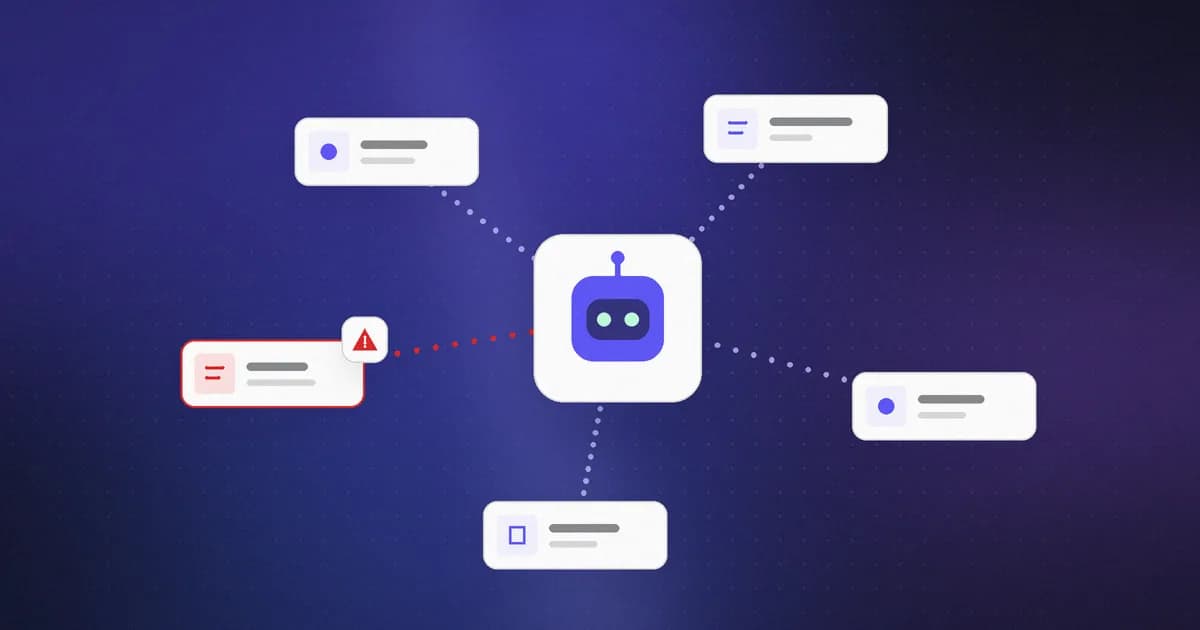
Coral is an open-source MCP gateway where coding agents write short TypeScript programs to call GitHub, Slack, databases, and thousands of other systems, then save programs that worked as reusable custom tools—under Allow, Ask, or Block policy on every provider call. The withcoral/coral repository, surfaced on Hacker News on November 16, 2026, describes execution rails: agents search tool signatures, send programs through an exec tool, and Coral runs them in isolated V8 contexts while injecting credentials only after policy checks. If you already run Claude Code or Codex with MCP, Coral is not another passive tool list; it is a code mode layer that lets agents author and persist their own automation. That shifts what you must approve, audit, and scan before you paste a workspace MCP URL into your client.
explainx.ai covers adjacent MCP tooling trends such as Google Stitch Skills; Coral is closer to a policy-wrapped execution plane than a static skill bundle.
| Question | Short answer |
|---|---|
| Am I affected? | Only if you install Coral or join a team workspace and add its MCP URL to your agent |
| Is there a fix? | Not a CVE—this is new architecture to govern with policy, approvals, and scanning |
| Does data leave my machine? | Provider calls egress from the Coral server you run; Coral markets zero data egress from its product surface |
| What should I do first? | Read default Allow/Ask on writes, block shared custom tools you did not review, scan MCP config |
What Coral adds beyond a typical MCP gateway
Most MCP setups expose a fixed catalog of tools. If update_record is allowed, the agent can usually update any record the upstream API permits. Coral's README argues that custom tools are code: an agent can encode rules like "close only stale tickets with no activity for 30 days" and you still apply Allow, Ask, or Block on that saved program.
The loop, from Coral's documentation on GitHub:
- The agent calls
coral.searchto list provider tools and TypeScript signatures. - It sends a program via
execthat chains provider calls and filters results. - Coral runs the program in a fresh V8 isolate with no network, credentials, or imports in the sandbox.
- Each outbound provider call hits a policy gate; writes can require human approval in the Coral UI.
- On success, the agent may save the program as
coral.private.<name>or an owner may publishcoral.shared.
Coral cites internal benchmarks on 34 GitHub, Linear, and Slack tasks with Opus 5.5: 37% fewer tokens, 31% lower cost, and 29% faster runs when agents reuse custom tools versus rewriting from scratch each day. Those numbers come from Coral's README, not an independent audit, but they explain why teams adopt the pattern: less repeated agent reasoning, more deterministic call shapes.
Architecture step by step
TypeScript program execution (exec)
Agents do not call Slack or GitHub MCP methods one at a time from the client. They submit a program. Coral's example lists open GitHub pull requests without reviewers and posts them to Slack, returning only PR numbers to the model context—not full JSON payloads. That reduces context bloat and limits what the model memorizes between turns.
Policy, credentials, and approval
Coral separates what the agent sees from what the server can do. Credentials attach after policy checks on the Coral host. Approvals show the exact call and arguments, which is closer to security-team review than a blanket "Slack write" permission.
Custom tool lifecycle
Private tools belong to the agent or user; shared tools propagate team workflows. The security wrinkle is supply chain inside your workspace: a helpful Friday-afternoon custom tool that calls three providers becomes one-step RCE-equivalent if it later embeds a broader query or exfil path and policy loosens.
Deployment modes
Individuals use a desktop app (macOS Apple silicon, Windows x64, Linux x86_64 per the README). Teams run a shared server with OIDC, TLS reverse proxy, and SQLite or Postgres. Enterprise features (SAML, SCIM, immutable audit log) are listed as forthcoming under a separate license in the ee/ directory.
Coral 1.x versus 0.x
Coral v1 replaces the SQL interface with TypeScript programs and starts from fresh state without migrating 0.x data, per the README upgrade note. Security teams upgrading should plan credential re-registration, policy rebuild, and re-teaching agents which saved tools exist—otherwise agents may hallucinate old SQL tools that no longer exist.
Provider catalog and bring-your-own OpenAPI
Coral ships a provider catalog but also accepts custom OpenAPI documents or arbitrary MCP servers. That flexibility matters for coding-agent users who already run an internal MCP bridge to a legacy API: Coral becomes a second aggregation point. Inventory every provider URL the same way you would inventory MCP entries in ~/.cursor/mcp.json or Claude's MCP config.
Coral compared with coarse MCP allow lists
| Control style | Typical MCP gateway | Coral |
|---|---|---|
| Unit of permission | Whole tool (update_record) | Provider tool or saved custom tool program |
| Agent expressiveness | Single JSON arguments per call | Multi-step TypeScript with filters |
| Credential exposure | Often in client env | Injected server-side after policy |
| Reuse | Re-prompt every session | coral.private / coral.shared libraries |
| Review burden | Approve tool once | Approve tool and each new saved program |
The table restates Coral's marketing claims in reviewer language: saved programs are the new attack surface. A malicious or careless custom tool approved Tuesday can run unattended Wednesday because the agent no longer re-derives the same guards.
How Coral differs from gateways we already cover
Beam documented CVE-2026-125926 in AWS's mcp-gateway-registry: authenticated operators could aim the registry at internal URLs. That class of bug is about registration SSRF, not agent-authored programs.
Coral's risk model is closer to arbitrary tool composition:
- MCP security guide patterns still apply: version-pin MCP servers, read OAuth scopes, and treat the gateway URL as secrets-adjacent.
- Offensive frameworks in GitGuardian's ARTEX catalog post show attackers love reusable agent loops. Coral's custom tools are the benign mirror—saved loops that defenders also need to inventory.
- Google GTIG's exploit_agent reporting is unrelated to Coral directly, but it reinforces that anything which speeds attacker automation has a defender-side counterpart: faster legitimate automation with weaker review equals incident fuel.
What developers are saying
Hacker News commenters on the Show HN thread focused on governance as agents gain write access:
- greenBottle reported their team is evaluating Coral.
- nikolicmilena argued granular controls become vital as agents get autonomy and write permissions, and planned a team trial.
- ocamoglu asked about real-world deployment learnings given Coral's stated use at hundreds of companies.
None of these comments substitute for a security review; they signal that practitioners see Coral as a permissions problem, not only a latency problem.
What this means if you run AI coding agents
-
Treat
coral.sharedlike production code. Require review before publish, same as a merged shell script in your repo. Diff saved tools when policy changes. -
Default Ask on destructive provider tools. Coral allows per-tool Allow, Ask, or Block. Start restrictive on payments, IAM, ticket closure, and mass messaging.
-
Separate user credentials where possible. Coral supports per-caller provider accounts so teammates share tools without sharing API tokens—still rotate if a custom tool logged arguments you did not expect.
-
Audit the MCP URL in config.
claude mcp addand Codex equivalents write JSON your agents read every session. Add Coral only from an operator you trust; scan after upgrades. -
Watch for prompt injection via task text. Coral gates provider calls, not the prompt that convinced the agent to call
coral.private.refundAll(). -
Compare to direct MCP sprawl. If Coral replaces five unmanaged MCP servers with one policy point, that is a win—if you actually disable the old endpoints.
-
Record training traces deliberately. Coral advertises structured traces (goal, tools, outcome) for post-training. Treat those logs as sensitive if they contain customer identifiers pulled from provider responses.
Connection commands worth copying safely
Coral documents explicit client wiring. Before you run them, confirm the MCP URL uses TLS and points at infrastructure your security team owns:
claude mcp add --scope user --transport http coral <your-mcp-url>
codex mcp add coral --url <your-mcp-url>
Cursor, VS Code, and OpenCode paths live in Coral's Connect an MCP client docs on GitHub. After adding Coral, run your usual MCP config export through a scanner—Beam and similar tools flag unknown hosts and missing version pins.
How Beam handles this
Beam is local-first monitoring for coding agents: heuristic skill and MCP config scanning (11 patterns plus version-pin checks), optional PreToolUse deny for Claude Code and Codex, and on-device event history with redaction before storage. It does not host MCP or execute Coral programs.
Where overlap exists:
- Before you add Coral, run MCP config through Beam's scanner and look for unknown HTTP transports or stale pins.
- During sessions, Beam can surface risky shell or curl patterns even when the actual SaaS call happens on the Coral server—useful when agents mix local bash with Coral
exec. - Limits: Beam is heuristic, hook-based, and fail-open if cached policy is missing. It does not parse TypeScript custom tools inside Coral and is not a replacement for Coral's Allow/Ask/Block UI.
For server-side policy engines and gateways, see also /#how and agent runtime security.
Frequently asked questions
What is Coral?
Coral is an open-source, self-hosted MCP gateway from withcoral. Agents write TypeScript programs that call provider tools such as GitHub or Slack. Coral checks each call against workspace policy, adds credentials, and can pause runs for human approval before forwarding requests.
How do agents connect Coral to Claude Code?
Coral's README documents claude mcp add --scope user --transport http coral <your-mcp-url> for Claude Code and codex mcp add coral --url <your-mcp-url> for Codex. Other clients use the workspace MCP URL from the Coral UI per Coral's connect guide.
What is a Coral custom tool?
When a TypeScript program succeeds, the agent can save it as a private tool callable via the coral.private namespace. Workspace owners may publish it as coral.shared for the team. Custom tools are code, not just another MCP catalog entry, so they can encode field-level rules a coarse Allow on update_record cannot express.
Does Coral run agent code on my laptop?
Programs run on the Coral server inside a fresh V8 isolate with no network, credentials, or imports, per Coral's architecture description. The desktop app runs on macOS, Windows, or Linux; teams can deploy a shared server with Docker Compose or Kubernetes.
Is Coral safer than connecting agents directly to SaaS MCP servers?
Coral adds per-call policy, approval prompts, and credential injection on the server side. It does not remove prompt-injection or malicious custom-tool risk: an agent can still author code that exfiltrates data if policy allows the underlying provider calls.
How does Coral relate to AWS mcp-gateway-registry?
Both sit between agents and backends. AWS's open-source registry had an SSRF registration flaw in versions before 1.35.0 (CVE-2026-125926). Coral is a different Apache-2.0 project focused on TypeScript program execution and saved custom tools, not the same codebase.
What should I scan before enabling Coral?
Treat the workspace MCP URL like any high-trust bridge: confirm who operates the server, review default Allow versus Ask on write tools, and inspect shared custom tools teammates publish. Locally, scan MCP JSON and skills before agents connect.
Can Beam monitor Coral-related agent actions?
Beam records and optionally denies PreToolUse tool proposals on supported Claude Code and Codex hooks. It does not replace Coral's server policy, but it can flag risky shell patterns in the same session and scan MCP config files before you add the Coral URL.
Related reading
- MCP security practical guide
- AWS MCP gateway SSRF (CVE-2026-125926)
- GitGuardian agentic framework catalog
- Claude Code MCP OAuth risks
- What is AI agent monitoring
Coral README and GitHub metadata were reviewed on November 16, 2026 UTC. Product behavior may change across Coral 1.x releases; verify against your installed version before enforcing policy.